

Annual Column
-Relocation and Unveiling of the "Clinical Innovation and Research Center": Advancing Smart Healthcare to Build a Sustainable Medical Ecosystem-
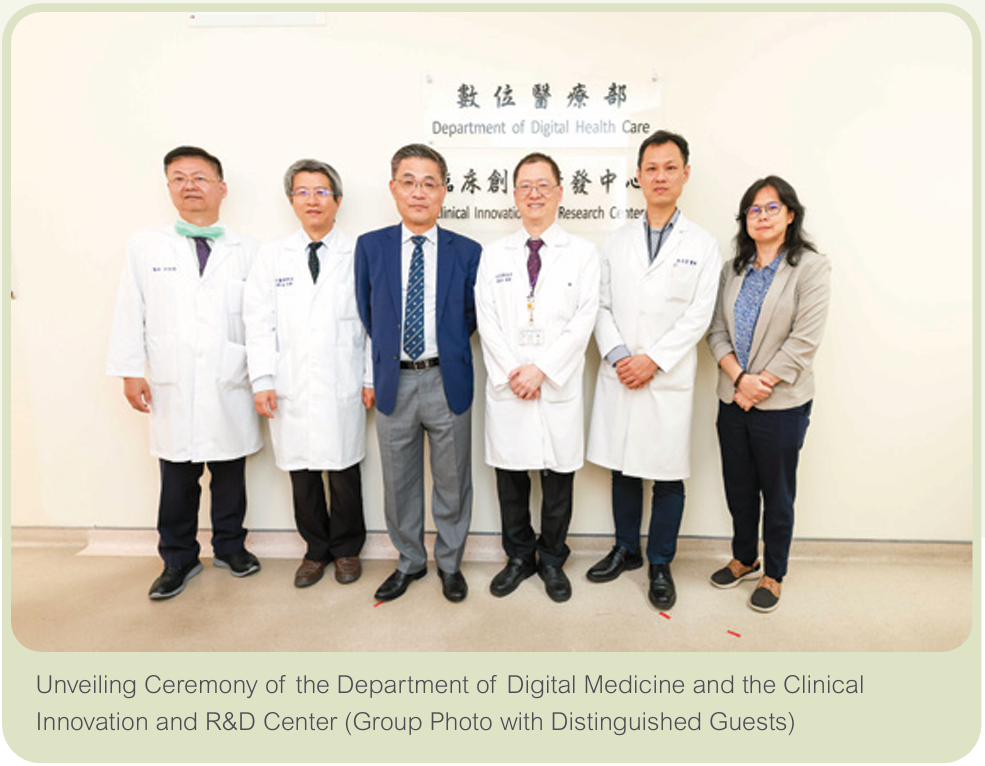
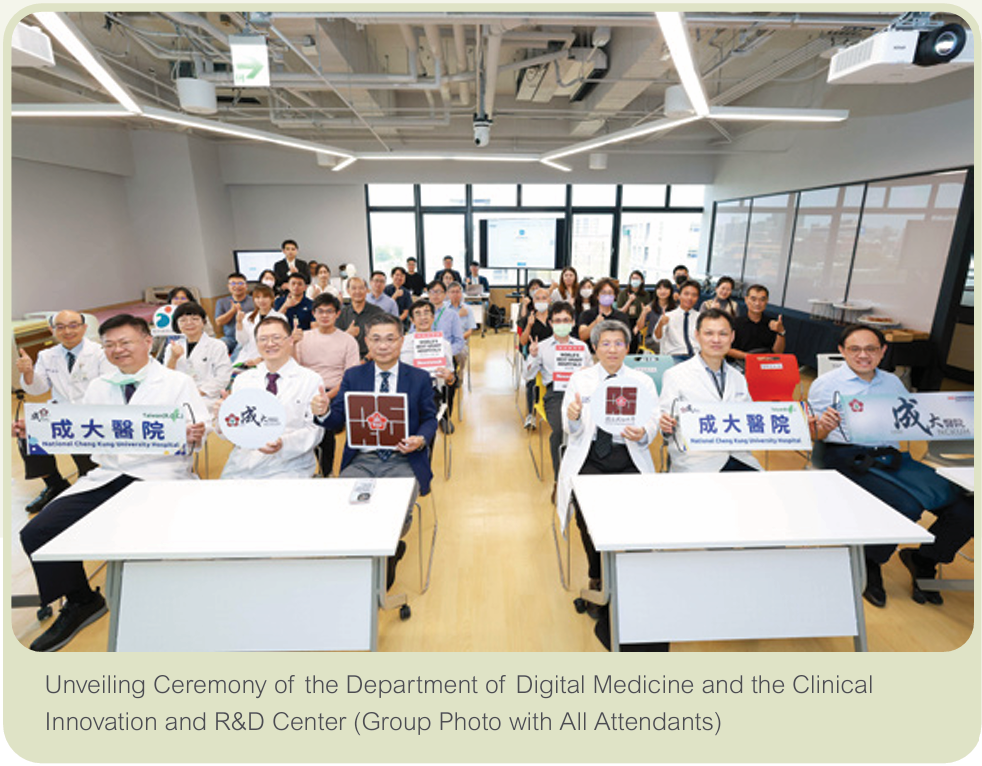
The healthcare industry has reached a new milestone in intelligent and sustainable operations. The Center for Clinical Innovation (hereinafter referred to as CIC) at National Cheng Kung University Hospital (NCKUH) held its relocation and unveiling ceremony in April 2026. NCKU President Shen, Meng-Ru, NCKUH Superintendent Li, Ching-Wei and College of Medicine Dean Cheng, Hsiu-Chi attended the event to witness the official launch of this "Smart Healthcare Incubation Base," designed to bridge clinical pain points with cutting-edge technology. This expansion not only symbolizes an upgrade to NCKUH's smart healthcare infrastructure but also embodies the hospital's concrete commitment to advancing social health and well-being, as well as healthcare corporate governance, under the ESG framework.
-
Accelerating the Implementation of Clinical Innovation through a "Co-Runner" Approach
Dr. Tsai, Yi-Shan, Director of the CIC, emphasized that healthcare accessibility and the translation of R&D achievements are critical. The core mission of the center is to serve as a "co-runner" in this process. In the past, translating research and development into clinical practice often suffered from communication gaps. The CIC addresses this by establishing a multi-party dialogue platform, enabling engineering and technology providers to align precisely with the practical needs of healthcare professionals and patients, thereby narrowing the gap between research and clinical application.
By integrating AI and big data, the center assists in developing higher-precision diagnostic tools. This advancement enhances healthcare quality, alleviates the workload of medical staff, and addresses social pain points such as health equity, ultimately achieving a new realm of "people-centered" smart healthcare.
-
A Paradigm of Cross-Domain Integration and Transparent Incubation
President Shen noted that universities possess robust engineering and technological R&D capabilities, while hospitals offer the most authentic clinical settings. The integration of these two realms is critical to the advancement and upgrading of Taiwan's biomedical industry.
The design of the CIC's new facility breaks away from the spatial barriers of traditional offices, offering an open, flexible environment for discussion and incubation while establishing a transparent and highly efficient academy-industry collaboration mechanism. This "university-hospital-industry" tripartite governance model not only effectively mitigates R&D risks but also ensures that innovative technologies grow rapidly on a foundation of regulatory compliance and medical ethics, ultimately fostering a sustainable biomedical ecosystem.
-
Digital Transformation Driving Green Healthcare
The digital transformation driven by the CIC also yields significant carbon reduction benefits. By developing smart healthcare solutions, traditional clinical workflows can progressively reduce paper consumption and energy depletion. Furthermore, R&D in precision medicine effectively optimizes diagnostic pathways, minimizing unnecessary waste of medical resources and the generation of medical waste, thereby realizing the vision of green healthcare right from the source of research and development.
-
Co-Creating a New Chapter in Healthcare Sustainability
NCKUH Superintendent Li stated that the relocation of the Clinical Innovation and R&D Center marks a significant step for NCKUH toward becoming a "Hospital of the Future." Moving forward, the center will continue to serve as a bridge connecting campus research capabilities with clinical needs. It aims not only to drive technological innovation but also to integrate sustainability concepts into the very core of healthcare governance.
With this fresh start for the CIC, NCKUH is declaring to the international community that smart healthcare is more than just a technological race; it is a commitment to social responsibility and a concrete practice of sustainable operations.