

Risk Governance
-Risk Governance-
As the only national university-affiliated medical institution in Southern Taiwan, the operational risks faced by the Hospital are primarily the impacts of external disasters, which may trigger scenarios such as the suspension of medical services, damage to facilities, or a sudden surge in patient admissions. By incorporating risk management into regular assessment items, comprehensive blueprints are made from aspects including business continuity planning, critical infrastructure maintenance, and manpower dispatching, constructing hierarchical management and resource preparedness mechanisms to ensure the continuous operation of critical functions, thereby stably maintaining necessary medical capacity and public responsibility when emergencies occur.
Southern REMOC
After experiencing the September 21 earthquake and the SARS epidemic, our country profoundly realized the importance of 24-hour emergency medical information integration and cross-regional command and coordination mechanisms. Facing major disaster events, the medical capacity of a single county or city is often insufficient to fully respond; therefore, the Ministry of Health and Welfare established six "Regional Emergency Medical Operations Centers (REOC)" nationwide, establishing a horizontal cooperation mechanism across counties and cities by integrating firefighting and disaster rescue, health administration, and emergency medical systems, and combining the vertical command systems of the central and local governments, so as to strengthen the national emergency medical response capability and elevate the efficiency of disaster medical rescue.
Relying on comprehensive cross-disciplinary medical resources and acute and critical care capabilities, the Hospital has been commissioned by the Ministry of Health and Welfare since 2004 to establish the Southern EOC, which was officially renamed the Regional Emergency Medical Operation Center, REMOC in 2013. During ordinary times, Southern REMOC is responsible for grasping the emergency medical operations and medical resource status within the region, monitoring disaster events that may affect medical operations 24 hours a day, and continuously conducting disaster medicine-related education, training, and drills; during disaster response periods, it provides accurate and rapid medical information in real-time, assisting the Ministry of Health and Welfare and local health bureaus in executing emergency medical response measures, strengthening cross-agency communication, coordination, and regional integration efficiency, and enhancing overall disaster medical quality and response resilience.
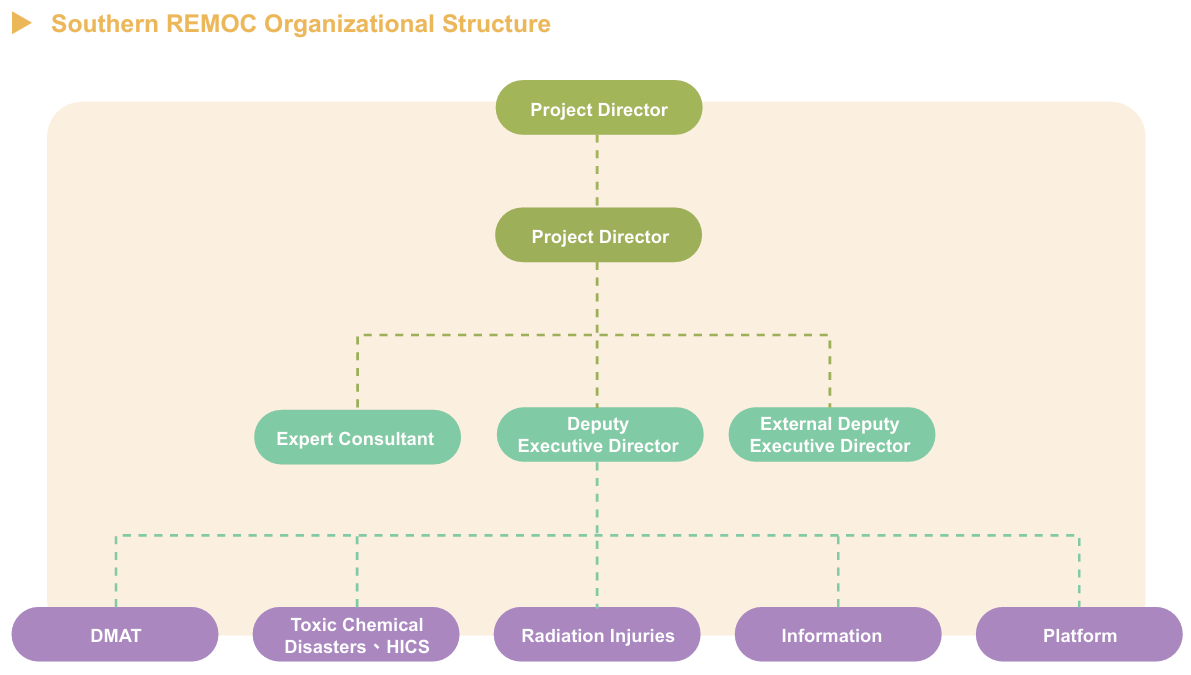
The superintendent of the Hospital serves as the principal investigator of the Southern REMOC project, the executive director and deputy executive directors are served by physicians from the Emergency Department, and supervisors of emergency departments from various hospitals in the Yunlin-Chiayi-Tainan region are invited to serve as deputy executive directors and expert consultants, establishing an inter-hospital cooperation platform to promote the integration and collaborative operation of regional medical resources, and continuously strengthening the disaster medical resilience of the southern region.
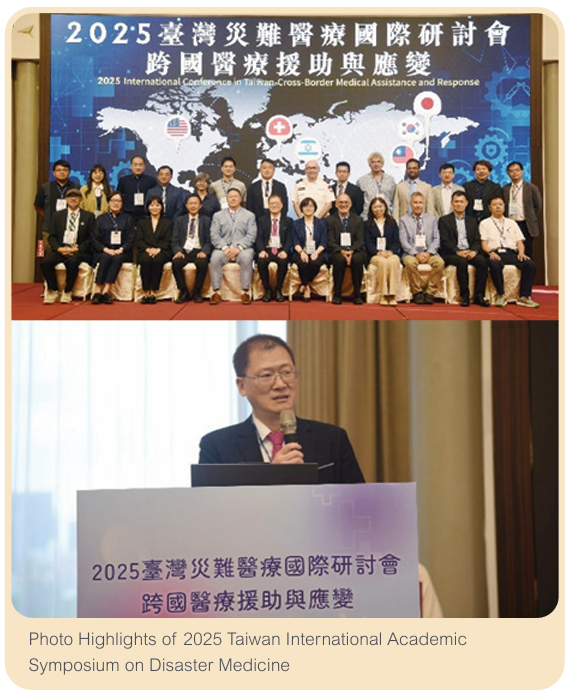
In 2025, the Hospital promoted the "International Emergency Medical Service Project," actively deepening international disaster medical cooperation and professional talent cultivation. In terms of professional training and capacity building, a total of 4 expert meetings were conducted, international humanitarian aid training courses were opened including 3 introductory courses and 2 advanced courses, and the "International Academic Symposium on Emergency Medical Rescue and Disaster Response" was held, inviting experts and scholars from countries such as the United States, South Korea, Japan, Switzerland, and Israel to participate in exchanges, promoting the sharing of disaster medicine and humanitarian aid experiences at home and abroad.
In terms of international cooperation and practical drills, the Hospital actively expanded transnational cooperation networks, establishing good cooperative relationships with official disaster relief agencies from multiple countries such as ASPR of the United States and Japan DMAT/JICA of Japan, was also invited to participate in a total of 2 disaster medical drills and training sessions in Shizuoka and Aomori regions of Japan, and went to Washington, USA to participate in the "DC Tranquil Passport Full-scale Exercise" live-force exercise, deepening practical experience in international disaster medical response and transnational collaboration, and enhancing the hospital's capacity to participate in international humanitarian aid missions.
In addition, Southern REMOC conducted a total of 15 education and training sessions and 8 drills in 2025, the contents of which covered Hospital Emergency Incident Command System (HICS), Disaster Medical Assistance Team (DMAT), toxic and chemical disaster medical care, radiation injury medical care, and community disaster emergency medical education promotion, etc., continuously elevating the disaster response capabilities of medical personnel and the community.
Physicians of the Hospital also actively devote themselves to public affairs and professional governance, being appointed as medical directors, consultants, evaluators, and committee members of various levels of governments and institutions, including positions such as medical directors of the Fire Bureau of Tainan City Government, and committee members of Tainan City Health Bureau, Kaohsiung City Government Department of Health, Yunlin County Health Bureau, and Chiayi County Health Bureau; relevant specialists also participate in professional competence assessment workshops of the Taiwan Society of Emergency Medicine, hospital disaster response drill inspections, as well as various emergency medical service consultations, reviews, and training trainee selections, continuously assisting in elevating the professional quality and overall response capability of the domestic disaster medical and emergency rescue systems.
Through regional integration, professional training, international cooperation, and social participation, the Hospital continuously deepens the construction of disaster medical resilience, fulfilling the mission of safeguarding public health and social safety, and actively advancing toward a sustainable medical system with international connectivity capabilities.
-
Risk Management
Resilient Hospital
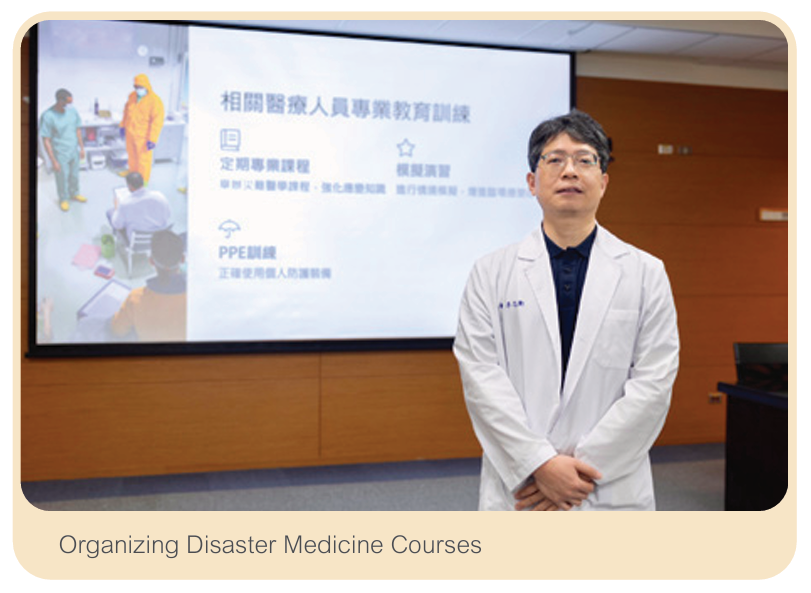
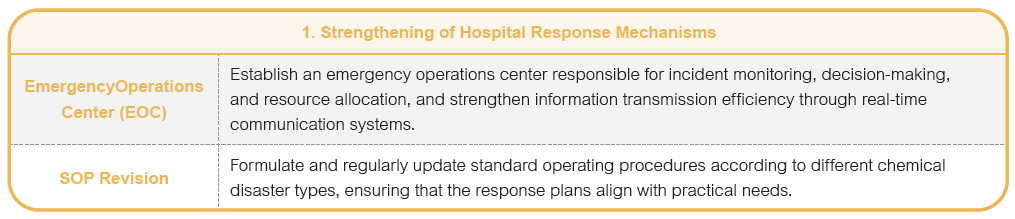
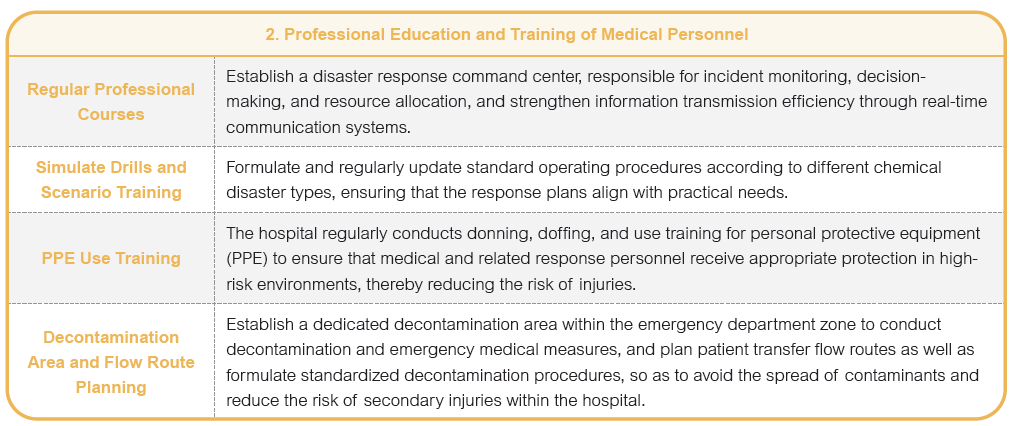
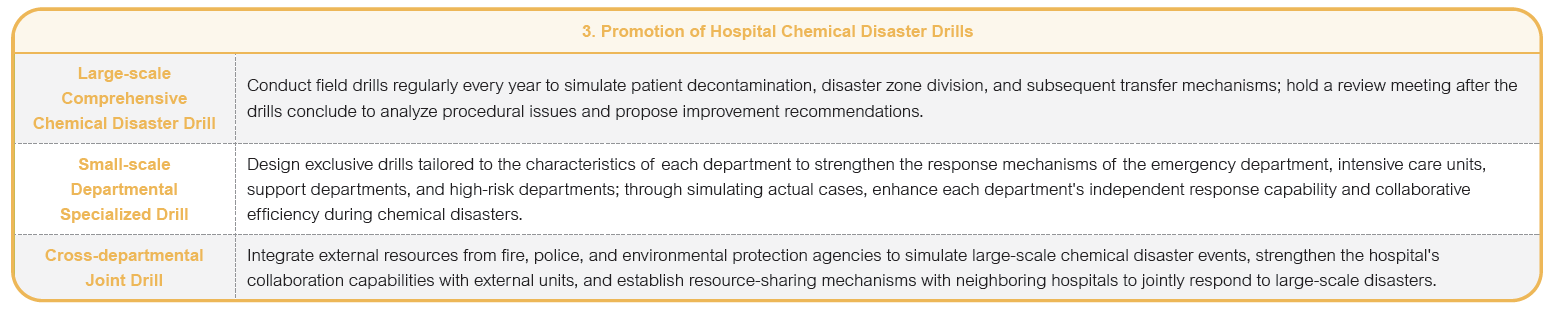
With the rapid development of global industrialization, the use of chemical substances has become increasingly common, and the risk of chemical disaster occurrences has risen accordingly, making the role played by medical institutions in disaster response more and more critical. Dr. Li, Chung-Hsun, Director of the Division of Toxicology of the Emergency Department at NCKU Hospital, pointed out that in addition to shouldering the responsibilities of rescuing lives and reducing injuries, the hospital must also prevent the spread of contamination and secondary injuries; therefore, it continuously aims at constructing a resilient hospital, comprehensively reviewing disaster response plans and strengthening internal response mechanisms.
Risk Identification
To systematically identify potential threats and vulnerable areas, the Hospital has implemented the “Hazard and Vulnerability Analysis (HVA)” as a risk identification tool. Responsible units for each sub-project form a dedicated assessment team based on the Hospital's historical disaster experience, external environmental changes, and emerging risk types, to regularly inventory events that could cause medical service interruptions or public safety threats.
The assessment process quantifies the probability of occurrence and the degree of impact for natural disasters, technological hazards, and other major risks, and calculates risk values based on the vulnerability analysis results, serving as the basis for risk ranking and the formulation of management strategies. Among them, events with a risk value exceeding 25% are classified as high-risk events, incorporated into the key focus areas of annual crisis management, and tracked regularly. Through this mechanism, the Hospital continuously strengthens cross-departmental collaboration, disaster response effectiveness, and medical service resilience.
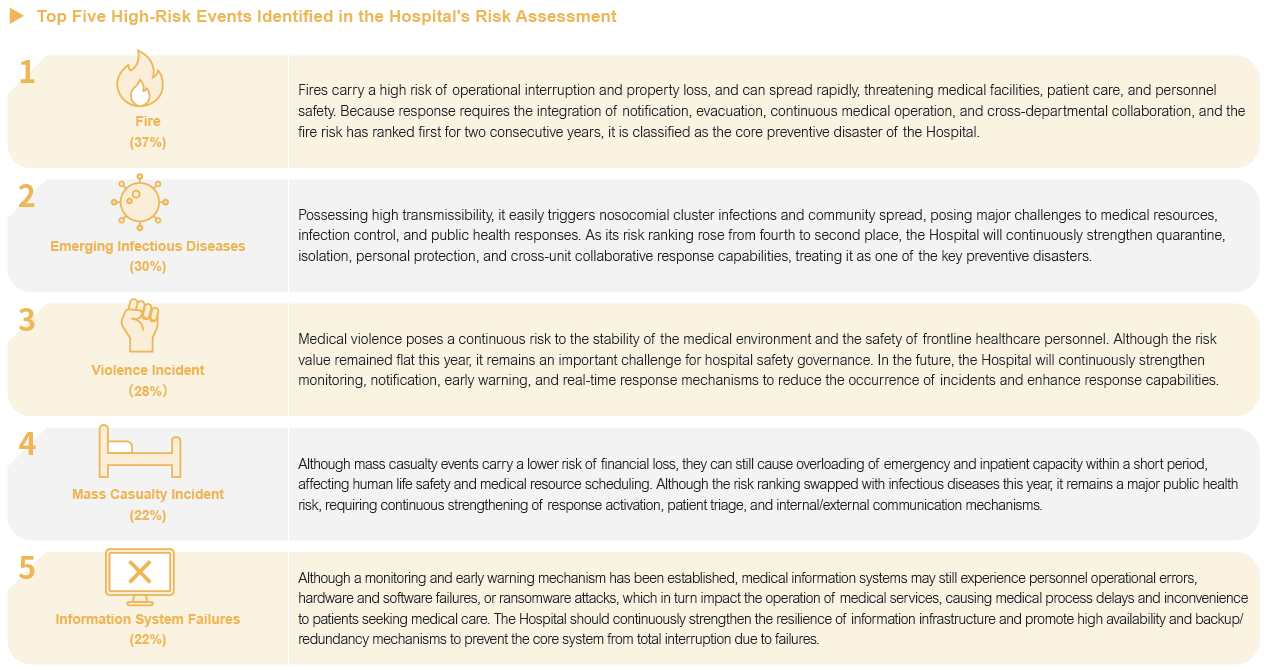
The results of the systematic risk assessment show that the top five potential risk events for National Cheng Kung University Hospital (NCKU Hospital) are, in order: fires, emerging infectious diseases, violent incidents, mass casualties, and information system failures. In view of the high probability of occurrence and powerful impact of such events, which hold significant warning value for patient safety and hospital operations, the Hospital has designated them as priority prevention and resilience-strengthening key items.
To effectively respond to high-risk threats, the Hospital has formulated exclusive response sub-plans for various types of events, covering key dimensions such as disaster prevention, command systems, resource allocation, manpower deployment, and post-disaster recovery. Through regular mock drills and professional education and training, the Hospital continuously refines cross-departmental coordination mechanisms and, by perfecting early warning systems, ensures that response operations can be activated immediately when sudden events occur, implementing uninterrupted medical services and making every effort to protect the lives and safety of patients and staff.
Crisis Management and Response System
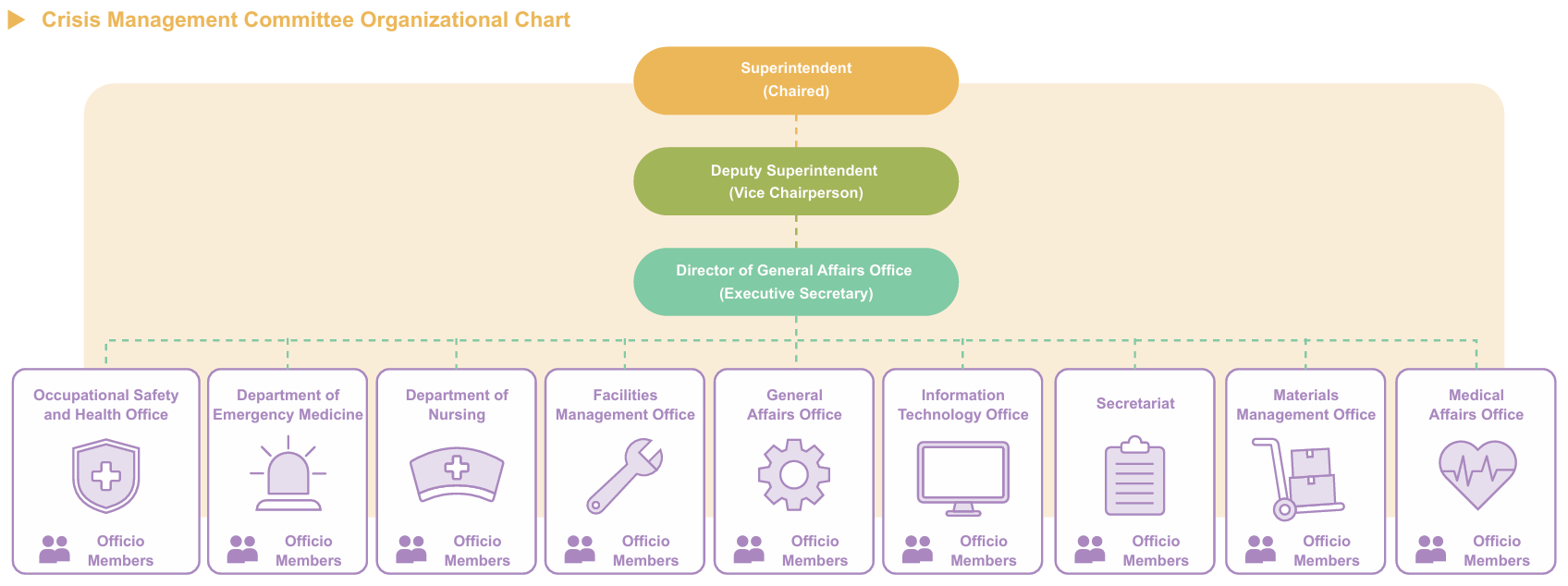
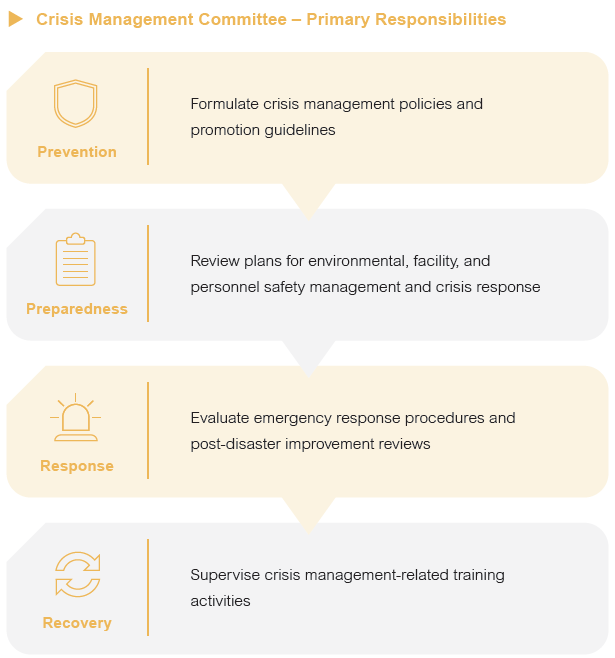
Facing multiple challenges such as climate change, major disasters, infectious disease risks, and information security, NCKU Hospital, as a national-level teaching hospital and a regional emergency responsibility hospital, has established a comprehensive risk management system and set up the “Crisis Management Committee” as the highest-level platform for risk decision-making and response. Convened by the Superintendent, the committee integrates cross-domain directors from engineering, information technology, medical affairs, and administration to participate jointly. Meetings are held regularly every quarter to coordinate the Hospital's major risk assessments and disaster response strategies. The committee has established a three-level mobilization mechanism based on disaster types and degrees of impact, which activates response operations immediately when an event occurs, and institutionalizes relevant plans and handling procedures to submit to the competent authority for record-keeping, thereby ensuring that emergency response measures possess both timeliness and compliance.
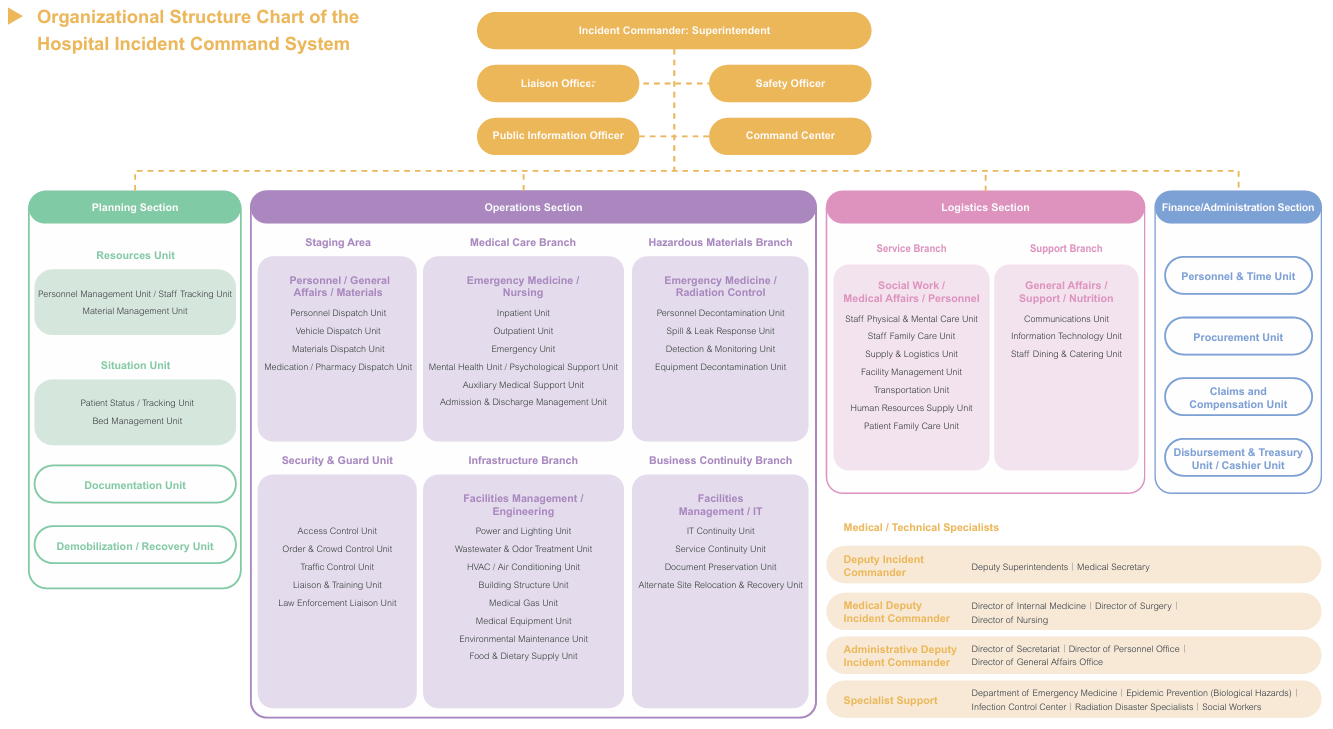
In terms of disaster response management, the Hospital has introduced the “Hospital Incident Command System (HICS)” to establish a management framework featuring hierarchical division of labor and horizontal integration, covering five major sections: Command, Planning, Operations, Logistics, and Finance/Administration. Through a clear division of rights and responsibilities, the command center can coordinate medical resources, information transmission, and cross-section coordination in real time; the planning section is responsible for bed management, manpower and material allocation, and the formulation of recovery plans; the operations section is responsible for frontline medical care, safety maintenance, and environmental monitoring; the logistics section provides facility operations, transportation, and logistical support; and the finance/administration section supports procurement, cashier duties, human resources protection, and disaster loss processing, ensuring that the overall system continues to operate stably under emergency scenarios.
Furthermore, aiming at the risk of medical interruption that may be caused by major disasters, the Hospital has also established a comprehensive patient relocation and regional support mechanism. When hospital facilities are damaged or medical capacity is limited, the Hospital will assist patients in transferring to cooperative medical institutions according to established relocation principles to maintain continuity of care; meanwhile, it also cooperates with the regional joint defense mechanism to provide patient admission and medical support when friendly hospitals initiate evacuation operations, continuing original treatment plans and demonstrating the resilient capacity of regional medical cooperation and resource sharing.
To continuously enhance internal response capabilities, the Hospital has established a cyclical improvement mechanism of “Education and Training - Field Drills - Post-Disaster Review” to integrate risk management into daily operations. Core courses such as information security and personal data protection, infection control, general medical education, emergency response, and first-aid training are conducted regularly every year. Through table-top exercises, fire and earthquake simulations, and mass casualty response among other composite live-action drills, the response capabilities and collaborative efficiency of colleagues facing sudden events are strengthened. In addition, through post-disaster feedback and knowledge management mechanisms, the Hospital continuously reviews and optimizes response processes, transforming practical experience into organizational learning energy to further enhance the resilience and sustainable development capabilities of medical services.