

Practicing Medical Humanities
-Practicing Medical Humanities-
Confronting the acceleration of population aging, the increasing complexity of disease typologies, and the rapid advancement of medical technology, National Cheng Kung University Hospital deeply perceives that addressing medical conditions solely through professional clinical techniques is no longer sufficient to fulfill the multifaceted needs of patients and their families at critical junctures of life. Consequently, through the continuous refinement of institutional designs, communication mechanisms, and care models, the Hospital integrates patient-centered core values into the healthcare delivery system. Emphasizing respect, empathy, companionship, and shared decision-making, the Hospital constructs a mutual-trust patient-physician relationship, thereby shaping a culture of patient-physician co-prosperity to support the overall stability of society.
-
Mutual Trust and Respect Between Patients and Physicians
Shared Decision Making(SDM)
With the progression of medical technology, disease interventions are no longer confined to a single standardized procedure; instead, they require a comprehensive consideration of clinical conditions, physical criteria, treatment risks, and subsequent impacts on quality of life. Placing patient rights at the very core of its medical services and social responsibilities, the Hospital continuously promotes SDM to establish transparent, equal, and mutually trusting patient-physician partnerships.
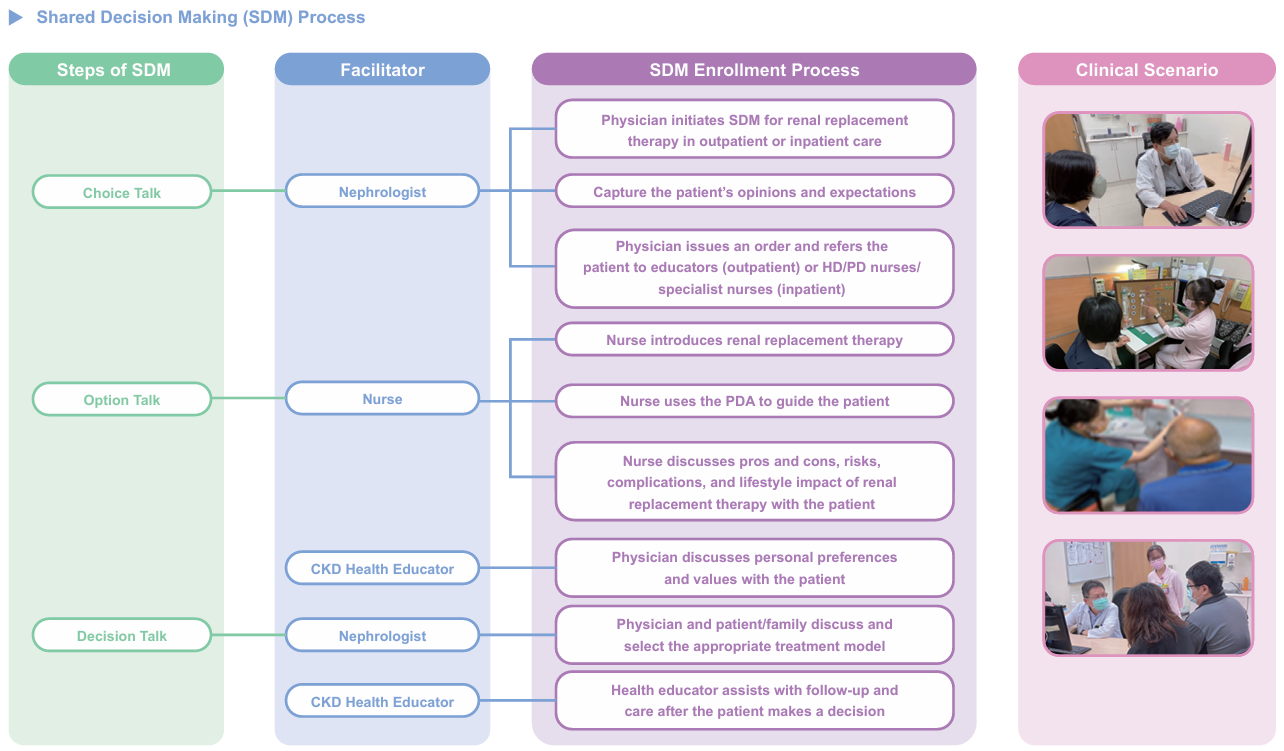
Currently, the Hospital’s various clinical departments have established 86 distinct SDM themes. Through interdisciplinary collaboration and the integration of SDM protocols into the clinical computerized physician order entry systems, the Hospital provides patient decision aids (PDAs) to assist patients and their families in comprehending treatment alternatives, risk-benefit ratios, and care implications, while empowering them to articulate personal values and preferences. Through collaborative patient-physician discussions and collective decision-making, this initiative not only mitigates patient anxiety but also substantially elevates medical communication quality and clinical outcomes, fully realizing the vision of patient-centered healthcare services.
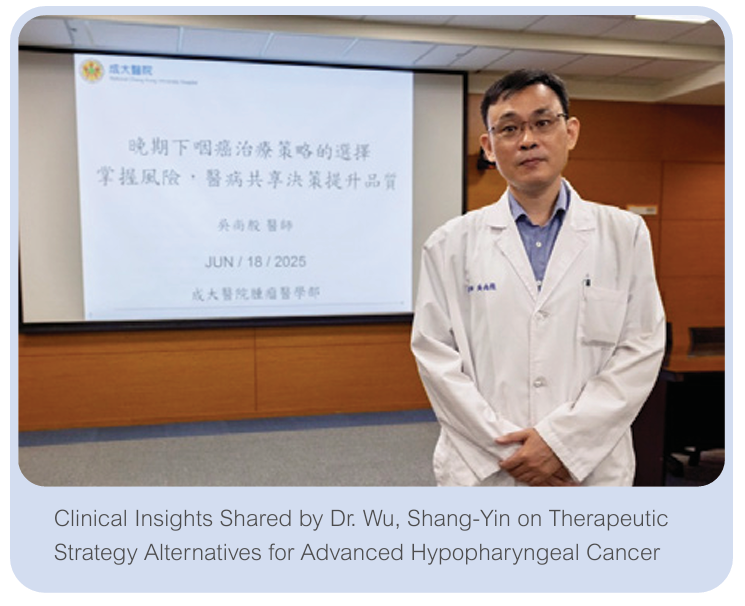
In clinical practice, SDM is continuously integrated into diverse disease care contexts, assisting patients in making appropriate choices aligned with their clinical conditions, treatment risks, quality-of-life impacts, and personal values. For instance, in the treatment of advanced hypopharyngeal cancer, the systematic elucidation of the risks and benefits of various regimens—such as concurrent chemoradiotherapy versus surgical combination therapy—assists patients in comprehending therapeutic disparities and reinforces subsequent follow-up management. In the field of critical care, the Hospital promotes an SDM mechanism for tracheostomy; the intensive care medical team conducts comprehensive evaluations encompassing clinical status, rehabilitation potential, and patient preferences, combining sufficient communication with appropriate surgical techniques to ensure that decisions fully realign with patient expectations and care objectives.
In 2025, the Hospital further deepened three key strategic SDM themes, including maternal and infant health empowerment, end-stage renal disease (ESRD) care, and precision anti-cancer decision-making. Notably, the postpartum feeding decision-making model respects the diverse choices of maternal women, achieving a 91% satisfaction rate; the therapeutic choice model for uremia yielded a 92% satisfaction rate; and the decision-making model for complex treatment regimens in advanced hypopharyngeal cancer attained a 100% satisfaction rate, thoroughly demonstrating the Hospital's concrete achievements in implementing patient-centered care, reinforcing informed participation, and elevating the quality of medical communication.
Through the deepened Shared Decision-Making (SDM) mechanism, the Hospital perfectly synthesizes clinical medical evidence with patient values, fostering mutual patient-physician trust and optimal therapeutic efficacy through high-quality communication. Moving forward, the Hospital will continuously expand the application scope of SDM to cultivate a medical environment that is highly respectful of patient autonomy, inclusive, and fundamentally patient-centered, thereby leading the paradigm of sustainable care within the digital health era.
-
2025 Annual Execution Results of Strategic Objectives
|
C1-1 Promotion and Implementation of Shared Decision Making (SDM) |
||
|
Annual Goals |
Implementation Status |
Target Achievement |
|
Promote three key SDM topics in clinical application with an implementation rate over 80% |
The implementation rate of the three key SDM topics in clinical application all exceeded 80% |
〇 |
Advance medical planning consultation
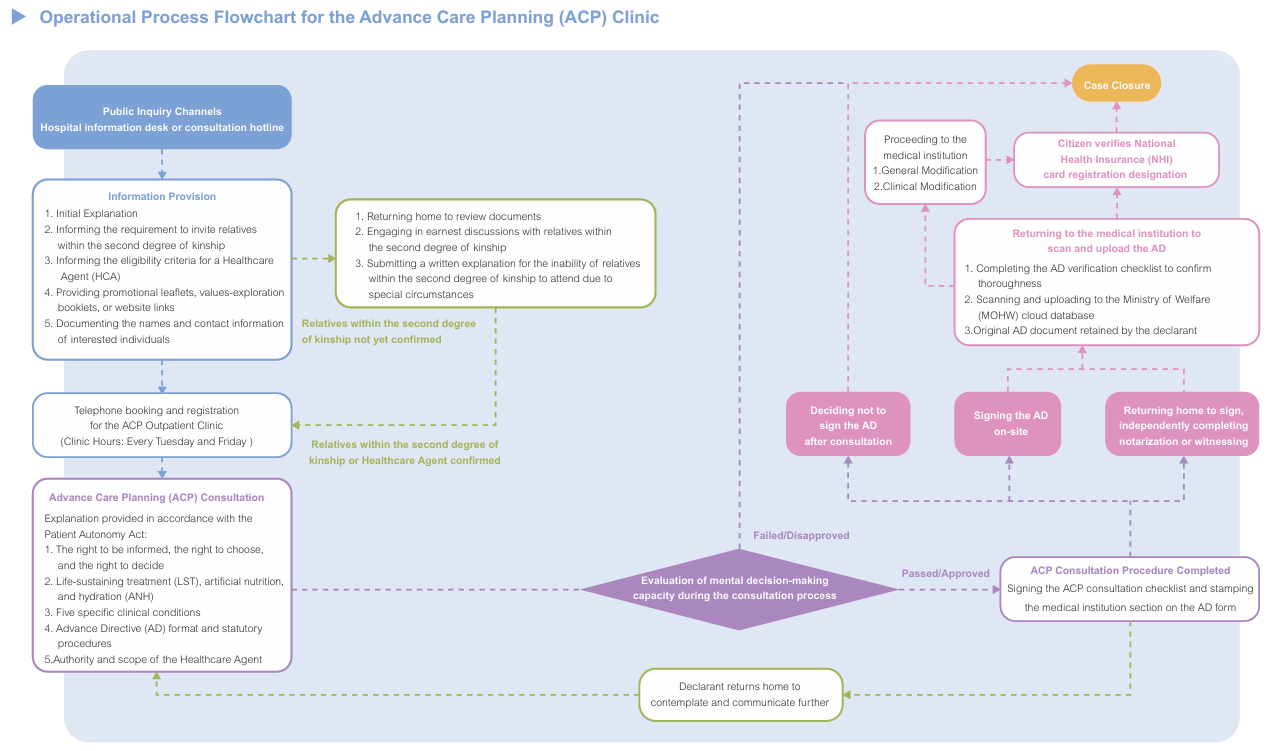
The Department of Family Medicine at the Hospital offers a specialized Advance Care Planning (ACP) clinic to assist the public throughout the discussion and consultation process with physicians, nurses, and social workers. This service empowers individuals to establish their own Advance Directives (AD) in advance, determining whether to accept or refuse life-sustaining treatments and artificial nutrition and hydration to prolong life, or alternatively, to adopt natural and compassionate hospice palliative care approaches should they ever encounter one of the five statutory clinical conditions (terminal illness, irreversible coma, permanent vegetative state, severe dementia, or other advanced diseases publicly announced by the central competent authority). This proactive measure effectively prevents patients from being forced to undergo medical treatments contrary to their personal wishes when physically frail or incapacitated, while simultaneously alleviating the profound stress and dilemmas imposed upon their children and families.
Organ Donation
Organ donation is a vital action that extends the hope of life. The Hospital incorporates organ donor family care into the core themes of its social responsibilities, establishing an interdisciplinary professional support mechanism driven primarily by medical social workers. Throughout the processes of donation decision-making, clinical communication, and bereavement adjustment, the mechanism provides holistic and whole-family care to fully safeguard the family's right to know, autonomy, and psychological well-being.
In 2025, the Hospital completed 10 cases of intensive care and intervention for organ donor families. The proportion of full-course companionship by social workers and the fulfillment rate of conducting at least one follow-up care visit within one year post-donation both reached 100%. Concurrently, 1 annual memorial and thanksgiving ceremony was organized, inviting organ recipients to share their stories of rebirth and honoring the selfless dedication of the donors, with a total of 43 family members participating. In the same year, in response to Organ Donation Memorial Day, the Hospital conducted 90 organ donation awareness and promotional activities, reaching 5,234 person-times to actively propagate life education and the core value of "extending life through love."
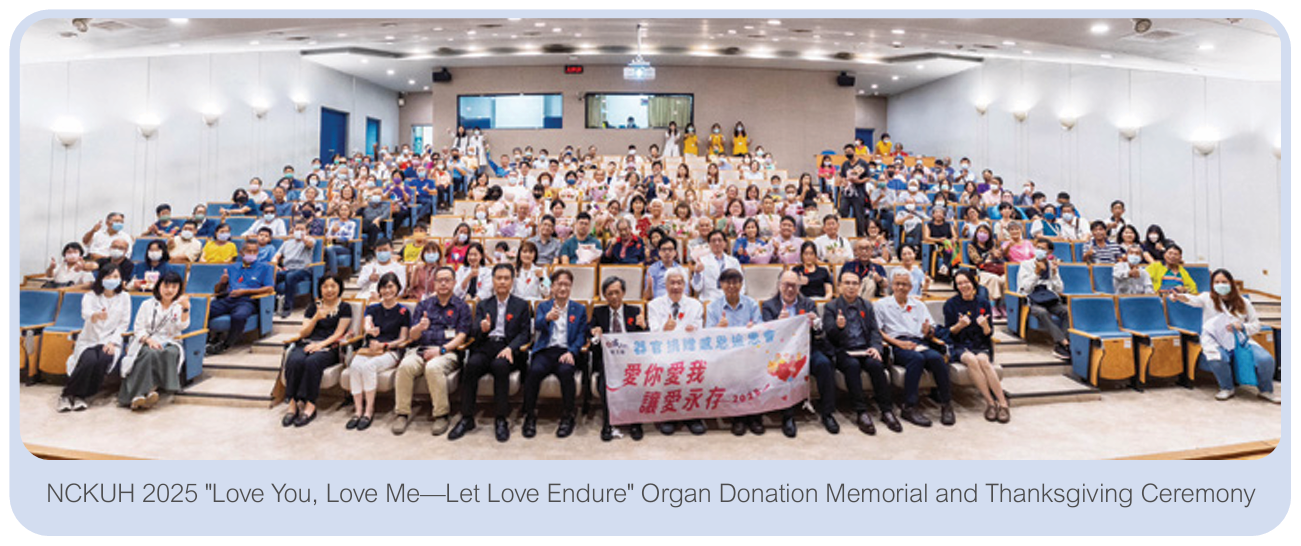
Furthermore, the Hospital completed 2 sessions of interdisciplinary professional education and training, reinforcing the medical team's communication capabilities and ethical sensitivity. Concurrently, the organ donation social workers completed the continuing education and training programs designated by the Taiwan Organ Registry and Sharing Center, achieving a 100% fulfillment rate to continuously elevate the quality of organ donation care services.
-
Holistic Palliative Care
Smart Hospice Care
Amid the continuous escalation of healthcare workforce constraints and expanding care demands, National Cheng Kung University Hospital persistently drives the concurrent advancement of smart medicine and human-centric care, applying digital transformation directly to palliative care settings to elevate the care quality and service resilience for end-of-life patients. In alignment with the high priority placed on "information system failures" and "digital resilience" within the 2025 annual risk identification matrix, the Hospital actively promotes smart palliative care systems, IoT devices, and mobile management tools. These technologies empower the medical and nursing teams to master patients' physiological statuses and comfort requirements in a more real-time manner, thereby mitigating administrative burdens while enhancing care efficiency and response speed.
Concurrently, smart palliative care facilitates the optimization of clinical workflows, reinforcing interdisciplinary team collaboration and continuity of care, which ensures that palliative services are stably delivered across diverse contexts. As a national-tier teaching hospital, the Hospital translates its experiences in promoting smart palliative care into a standardized "knowledge management and feedback mechanism." Furthermore, through international benchmarking, the Hospital integrates risk governance methodologies—including reporting, evacuation, and relocation protocols—into daily palliative services, ensuring that end-of-life care remains uninterrupted even under extreme disasters or exceptional scenarios.
Palliative Safeguarding
While pursuing high-quality medical excellence, the Hospital attaches profound importance to the dignity and humanistic care of patients at the end of life. In response to the increasing demand for emergency medical care and palliative interventions within an aging society, the Hospital continuously extends its palliative and hospice care from traditional wards into the Emergency Department (ED) setting, enabling patients with urgent needs to receive appropriate care and support at the earliest possible stage.
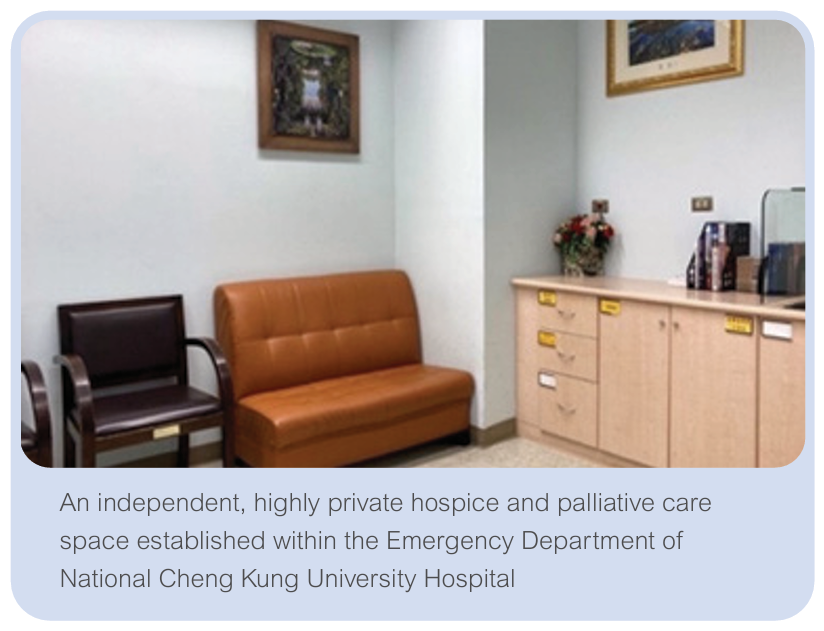
Traditionally, the ED has been predominantly viewed as a setting centered on acute illness and trauma diagnosis and treatment, rather than a preferred location for palliative and hospice care. In response to the growing societal need for both emergency intervention and palliative alleviation under an aging demographic, National Cheng Kung University Hospital systematically expands its palliative care from traditional wards into the emergency domain. The Emergency Department has been delivering palliative care services since 2017, established the "Palliative and Hospice Shared Care Center" in 2019, and further dedicated an independent Emergency Palliative Room (the R88 Single Patient Ward) in 2022. By integrating interdisciplinary team resources—encompassing inpatient hospice, home-based hospice, pharmacists, psychologists, social workers, and spiritual care providers (chaplains)—the Hospital delivers collaborative consultation and integrated care services for emergency patients and their families, assisting patients in attaining more dignified, warm, and supportive medical care at the final juncture of life.
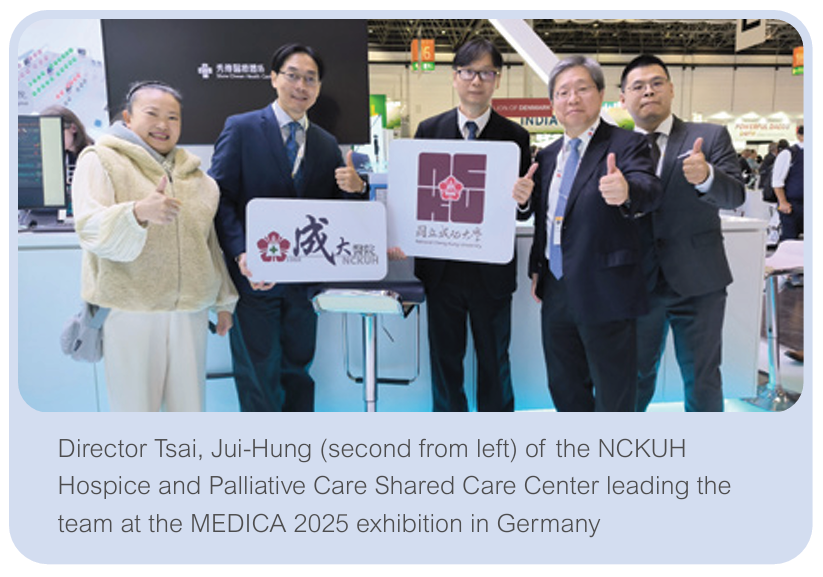
To further materialize this care philosophy, National Cheng Kung University Hospital participated in the MEDICA 2025 exhibition in Germany. The hospice care team showcased three core achievements: the QOCA apc kit, the QOCA abc ECG system, and the nFOPT® Huijia Health smart optical fiber mat. These innovations demonstrate the Hospital's commitment to deepening human-centric care through technology, creating a gentle yet highly efficient smart hospice care model, and ensuring that patients and their families receive dignified and reassuring support during the final stages of life. Through this participation in Germany, the Hospital not only showcased Taiwan's innovative breakthroughs in the field of smart hospice and palliative care but also leveraged collaboration with the international medical community to further promote the value of smart hospice care on a global scale.
-
2025 Annual Execution Results of Strategic Objectives
|
L1-1 Percentage of Employees Participating in One-Hour Palliative Care Course |
||
|
Annual Goals |
Implementation Status |
Target Achievement |
|
At least 80% of employees participate in a onehour palliative care course, and the annual average course satisfaction rating reaches 4 or above (on a 5-point scale) |
94.84% of employees participated in the onehour palliative care course, and the annual average course satisfaction rating reached 4.9 |
〇 |
|
L1-2 Number of New Medical Personnel Completing Palliative Care Training |
||
|
Annual Goals |
Implementation Status |
Target Achievement |
|
❶ At least 4 new attending physicians of the Hospital complete basic or advanced training for palliative care teams ❷ 8 new nurses from the Nursing Department complete basic or advanced training for palliative care teams |
❶ 4 new attending physicians of the Hospital completed basic training for palliative care teams ❷ 8 new nurses from the Nursing Department completed training for palliative care teams |
〇 |